We all live in different parts of the world, but if we look around us, we will find countless creatures.
Why were we created? And why were these creatures and plants created with us? Were they created randomly? Or is there a perfect plan?
In this article, we will try to scientifically explain these questions. We will try to understand the meaning of ecosystems and why we evolve according to a specific order.
Why weren't we randomly created, and what happens if the ecosystem goes wrong?
What Is an Ecosystem
The concept of an Ecosystem means that when a group of living organisms exists in a specific place, whether they are humans, animals, or plants, they live together.
- •Essential Elements:
- Living organisms are surrounded by non-living elements such as air, water, soil, and the sun.
- •Inextricable Connection:
- These elements are interconnected with living organisms in a way that forms the basis for survival.
- •Fragile Sequence:
- If this connection is disrupted, it affects all other living organisms and may lead to extinction.
Definition of Ecosystem: a Deeper Scientific Understanding
Scientifically, an Ecosystem is a specific place or environment in which a diverse group of organisms interact with nonliving elements in an interconnected and organized manner to maintain a natural balance.
It is a web of life in which each part influences and is influenced by the others so that the entire system can continue to function normally.
Types of Ecosystem
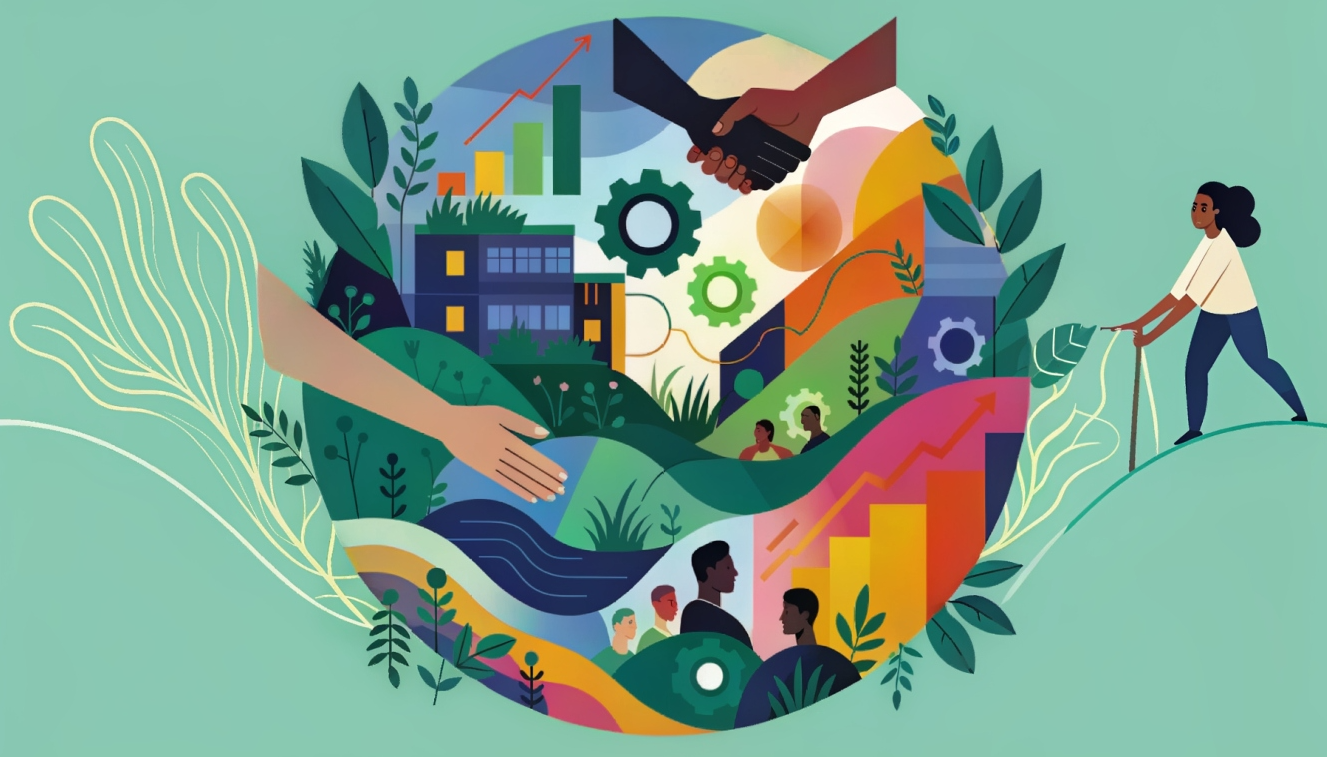
Natural Ecosystems
These are systems that form naturally without human intervention, evolving as a result of geographical and climatic conditions.
- •Terrestrial:
- Forests, deserts, grassy plains, tundra, and mountainous regions.
- •Aquatic:
- Rivers, lakes, swamps (fresh water) or seas, oceans, and coral reefs (salt water).
Artificial or Man-Made Ecosystems
These are human-made ecosystems where elements are controlled to serve specific purposes like agriculture or urban beautification.
- •Farms:
- Agricultural areas fully controlled by humans for crops or livestock.
- •Urban Parks:
- Green spaces designed to improve city environments.
- •Aquariums:
Closed environments managed for aquatic life.
Business Ecosystem
An interconnected network of organizations, individuals, and resources that collaborate and compete within a market. It includes suppliers, customers, competitors, and regulatory bodies.
Digital Ecosystems
A network of devices, services, and applications working together in the technological world.
- •Apple:
- Linked devices like iPhone, iPad, and iCloud.
- •Google:
- Applications like Gmail, Drive, and Android.
- •Amazon:
- Prime, Alexa, and AWS cloud services.
How Does Taqat Contribute to the Development of the Ecosystem?
TAQAT is a company established in 2014 with the primary goal of achieving the sustainability goals of Qatar National Vision 2030. It focuses on technology, the environment, society, and many other fields.
TAQAT has many different projects and programs that contribute to improving the ecosystem of all its kinds, and technological systems.
- •Placing sustainability at the heart of every project.
- •Ensuring environments are fit for future generations.
- •Transforming projects to be eco-friendly and highly profitable.
If you own a project and want to make it environmentally friendly and compatible with ecosystem maintenance, TAQAT is the perfect place for you.